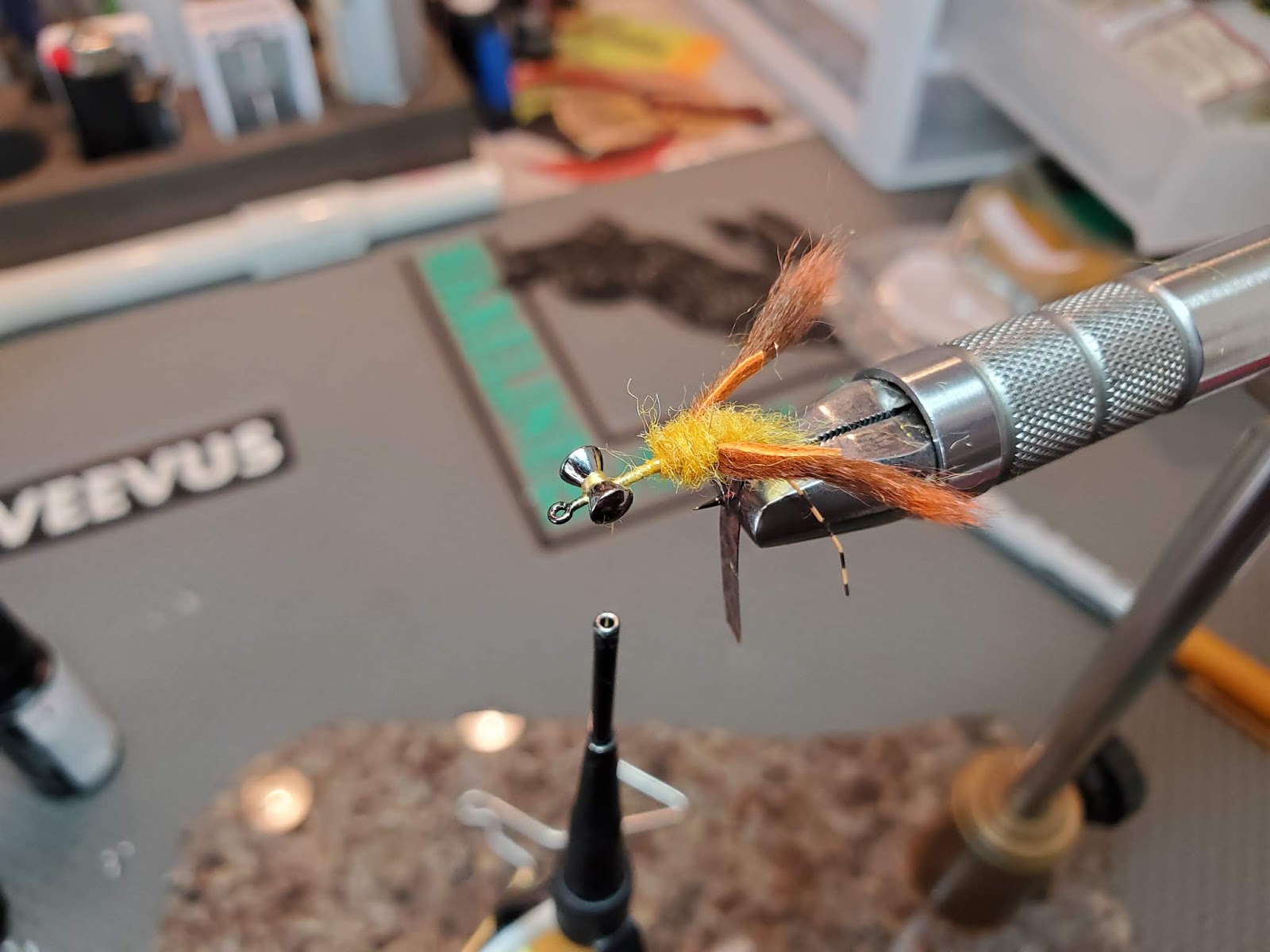
The internet, along with the many forms of social media, are amazing platforms to build an audience with and I've been impressed with the vise work of Brandon Bailes of Panther Branch Bugs for some time now.
A few weeks ago a package arrived from Brandon with a dozen "T.F.M. Glass Hoppers" built off the idea of his Panther Branch Hopper pattern. These flies float like a cork and certainly have the looks to go with them. It's also not surprising that this pattern will be available through Orvis next year.
I asked Brandon if he'd mind putting together a step by step tutorial and he obliged. Follow this post all the way to the end for an Instagram giveaway with Panther Branch Bugs and Tacky Fly Fishing.

BRANDON'S PANTHER BRANCH HOPPER

Do yourself a favor and buy a set of River Road Creations tapered body cutters and start stamping out some 2mm foam in whatever color you dig.

Take 2 of the bodies and put a dab of superglue gel on the butt end only……start building a small army!

Next grab some quality hooks in appropriate size ( I use the Allen D202 because they are heavy enough to keep the fly keeled over correctly)


Put a hook in the vise and dub the shank to match the foam

Next apply a tad of superglue gel to the shank (where the hook bend starts) and tie on the body making the butt segment and then dub over the thread wraps before continuing forward.


Cut a few small clumps of deer belly hair and shuffle it in your hand to mix. Use a hair stack to align everything and tie on top of the head/body segment. Trim excess off


Then grab a pair of sili legs and tie a set on each side and trim to the desired length, add an indicator( optional), add some eyes, and dub the thread wraps before advancing to the hook eye and whip finish.


To participate in this excellent giveaway, please go to the T.F.M. Instagram page and leave a comment on the above image of where you'd fish these tasty looking foam hoppers.
A winner will be chosen by random number generator on Wednesday morning. Good luck.
A few weeks ago a package arrived from Brandon with a dozen "T.F.M. Glass Hoppers" built off the idea of his Panther Branch Hopper pattern. These flies float like a cork and certainly have the looks to go with them. It's also not surprising that this pattern will be available through Orvis next year.
I asked Brandon if he'd mind putting together a step by step tutorial and he obliged. Follow this post all the way to the end for an Instagram giveaway with Panther Branch Bugs and Tacky Fly Fishing.

Brandon wrote... "As for the birth of the Panther Branch Hopper, I started using terrestrials instead of poppers a few years ago. I fish small creeks and
streams and in the summer these waters are normally low and super clear
and of course the fish get super spooky.
After fishing my favorite smallie stream one morning, and getting skunked, I sat on a rock and watched a smallie torpedo up a riffle to inhale a grasshopper that had landed near the bank! I couldn’t believe it as this fish almost beached itself to eat one of these bugs.
So naturally I went home and hit the vise to come up with a nice profile hopper. I went with a #6 hook and it proved to work but over time I began adding stuff to the pattern for a number of reasons…
1. I wanted the fly to sit low in the water to show off the full profile
2. I added the antennae for additional profile and movement, without imparting.
The end result has been well received and so far this lil hopper has caught smallies, bucketmouths, carp, rainbow trout, brown trout, brookies, and a few of the elusive bluegill."
After fishing my favorite smallie stream one morning, and getting skunked, I sat on a rock and watched a smallie torpedo up a riffle to inhale a grasshopper that had landed near the bank! I couldn’t believe it as this fish almost beached itself to eat one of these bugs.
So naturally I went home and hit the vise to come up with a nice profile hopper. I went with a #6 hook and it proved to work but over time I began adding stuff to the pattern for a number of reasons…
1. I wanted the fly to sit low in the water to show off the full profile
2. I added the antennae for additional profile and movement, without imparting.
The end result has been well received and so far this lil hopper has caught smallies, bucketmouths, carp, rainbow trout, brown trout, brookies, and a few of the elusive bluegill."
BRANDON'S PANTHER BRANCH HOPPER
Hook- Allen D202
Body- 2mm Foam x2
Underbody- Laser dub
Wing- Deer Belly Hair
Legs/ Antennae- Sili Legs
Eyes- MFC Hopperize 3.5mm
Thread- UTC 140
Here's the step by step on how to tie the Panther Branch Hopper...

Do yourself a favor and buy a set of River Road Creations tapered body cutters and start stamping out some 2mm foam in whatever color you dig.

Take 2 of the bodies and put a dab of superglue gel on the butt end only……start building a small army!

Next grab some quality hooks in appropriate size ( I use the Allen D202 because they are heavy enough to keep the fly keeled over correctly)


Put a hook in the vise and dub the shank to match the foam

Next apply a tad of superglue gel to the shank (where the hook bend starts) and tie on the body making the butt segment and then dub over the thread wraps before continuing forward.
Now lift the foam and advance the thread to about 3 hook eye lengths
from the end. Add some more gel and wrap the thread to make the
body/head segment. Trim the top foam piece even with hook eye.

Poke 2 holes in the bottom foam for antennae. Its best to fold the foam
over the top piece to center the holes with the top foam. Then thread
the sili legs through the holes.


Cut a few small clumps of deer belly hair and shuffle it in your hand to mix. Use a hair stack to align everything and tie on top of the head/body segment. Trim excess off


Then grab a pair of sili legs and tie a set on each side and trim to the desired length, add an indicator( optional), add some eyes, and dub the thread wraps before advancing to the hook eye and whip finish.

Finally….grab a glass rod and hit the water!!

INSTAGRAM GIVEAWAY
Brandon of Panther Branch Bugs was very generous and sent a half dozen of each T.F.M. color scheme of the Panther Branch Hoppers to giveaway. I am keeping one of each for my personal stash and the other ten are housed in a new Tacky Big Bug Box to give away on Instagram.

To participate in this excellent giveaway, please go to the T.F.M. Instagram page and leave a comment on the above image of where you'd fish these tasty looking foam hoppers.
A winner will be chosen by random number generator on Wednesday morning. Good luck.